
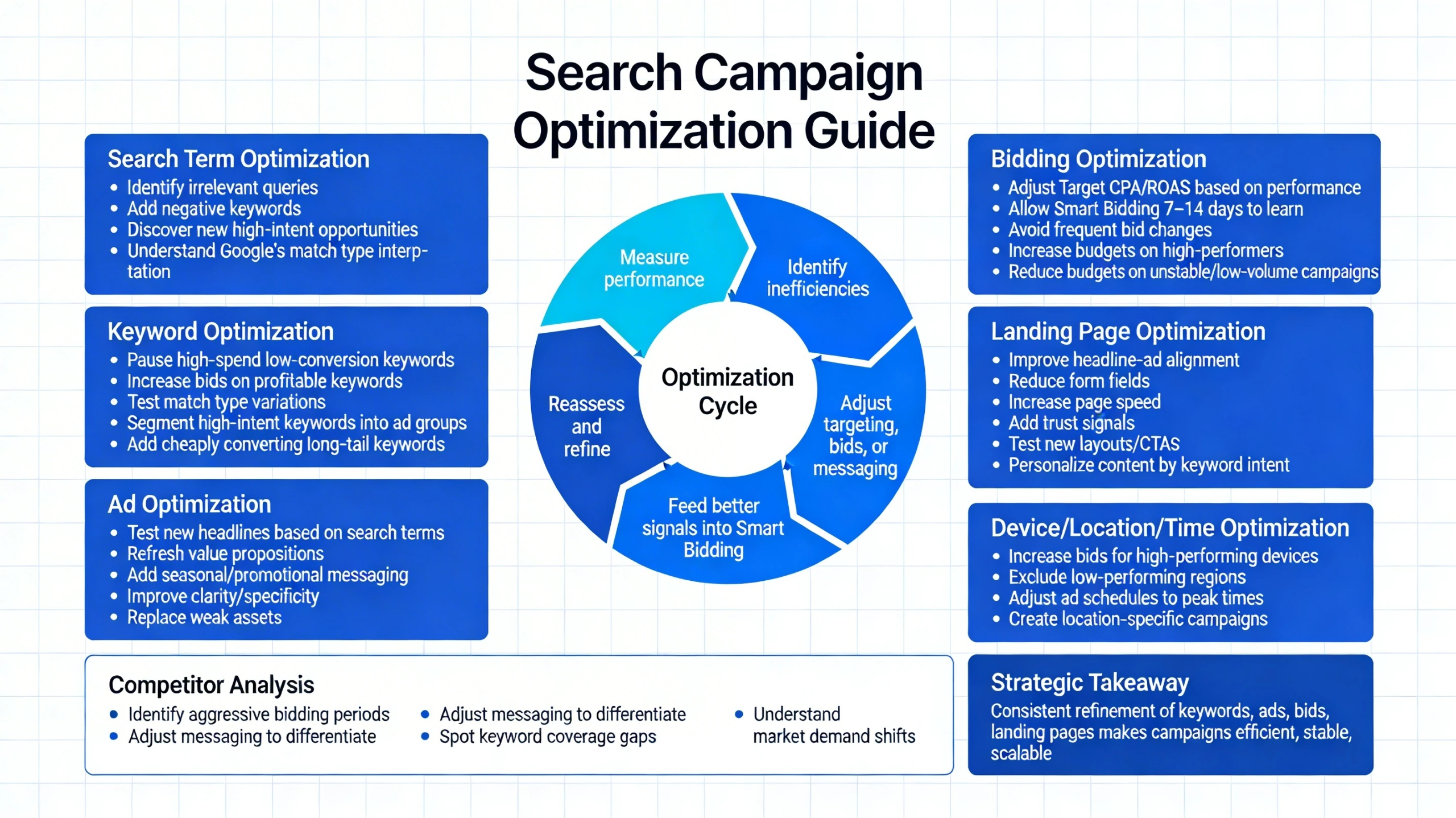
Search campaign optimization is the ongoing process of refining keywords, ads, bidding, and landing pages to improve efficiency and scale profitable traffic. Even with a strong structure and solid fundamentals, search campaigns degrade over time without active optimization. User behavior shifts, competitors adjust bids, and Google’s algorithm evolves. This pillar outlines the systems and levers that keep search campaigns sharp, profitable, and scalable.
How Optimization Works in Google Ads
Optimization is not a single action—it’s a continuous cycle:
- Measure performance
- Identify inefficiencies
- Adjust targeting, bids, or messaging
- Feed better signals into Smart Bidding
- Reassess and refine
This cycle ensures your campaigns adapt to market changes and maintain strong performance.
Search Term Optimization
Search terms reveal the real intent behind your traffic. Reviewing them regularly helps you:
- Identify irrelevant queries
- Add negative keywords
- Discover new high-intent opportunities
- Understand how Google interprets your match types
High-performing advertisers treat search term mining as a weekly ritual. It protects budget and strengthens relevance.
Keyword Optimization
Keyword optimization focuses on improving performance at the keyword level. Key actions include:
- Pausing keywords with high spend and low conversions
- Increasing bids on profitable keywords
- Testing match type variations
- Segmenting high-intent keywords into their own ad groups
- Adding long-tail keywords that convert cheaply
This ensures your budget flows toward the most profitable search behavior.
Ad Optimization
Ads must evolve with user behavior and competitive messaging. Effective ad optimization includes:
- Testing new headlines based on search term insights
- Refreshing value propositions
- Adding seasonal or promotional messaging
- Improving clarity and specificity
- Reviewing asset performance and replacing weak ones
Even small improvements in CTR can significantly reduce CPC and improve Quality Score.
Bidding Optimization
Bidding optimization ensures your strategy aligns with your data maturity and goals. Key actions include:
- Adjusting Target CPA or Target ROAS based on performance
- Allowing Smart Bidding enough time to learn (7–14 days)
- Avoiding frequent bid strategy changes
- Increasing budgets on high-performing campaigns
- Reducing budgets on unstable or low-volume campaigns
Bidding optimization is about stability and incremental adjustments, not drastic swings.
Landing Page Optimization
Landing pages influence both conversion rate and Quality Score. Optimization includes:
- Improving headline alignment with ads
- Reducing form fields
- Increasing page speed
- Adding trust signals
- Testing new layouts or CTAs
- Personalizing content based on keyword intent
A 10–20% lift in conversion rate often produces a larger impact than any bid adjustment.
Device, Location, and Time Optimization
Performance varies by context. Reviewing segmentation data helps you:
- Increase bids for high-performing devices
- Exclude low-performing regions
- Adjust ad schedules to match peak conversion times
- Create location-specific campaigns for better relevance
These refinements improve efficiency without changing your core structure.
Competitor Analysis
Competitors influence CPC, impression share, and user expectations. Monitoring them helps you:
- Identify aggressive bidding periods
- Adjust messaging to differentiate your offer
- Spot gaps in their keyword coverage
- Understand shifts in market demand
Competitor insights often reveal new opportunities for scaling.
Strategic Takeaway
Search campaign optimization is a disciplined, ongoing process. When you consistently refine keywords, ads, bids, and landing pages, your campaigns become more efficient, more stable, and easier to scale.