
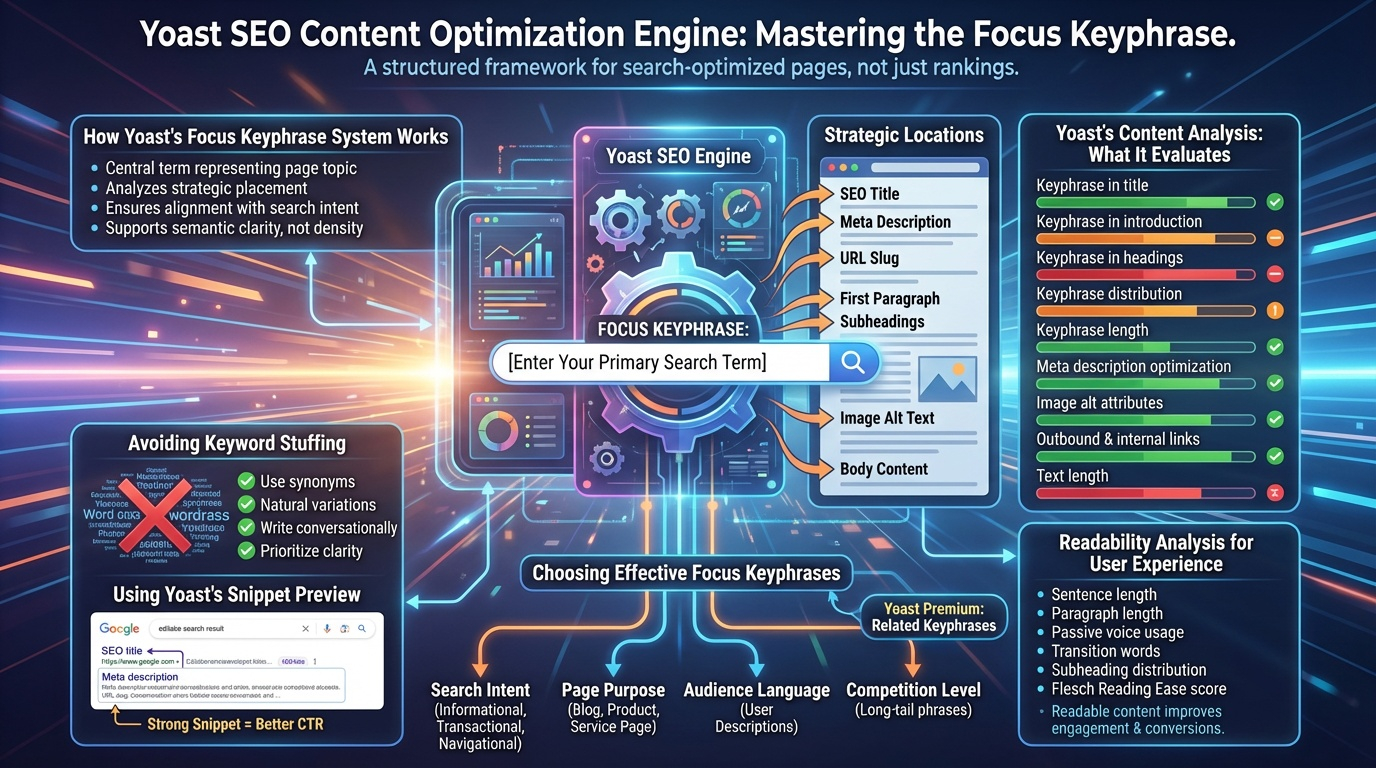
Yoast SEO’s content optimization engine is built around the concept of a focus keyphrase—the primary search term a page is intended to rank for. While Yoast does not “rank” your content, it provides a structured framework to ensure your pages follow SEO best practices. This pillar explains how to choose keyphrases, how Yoast evaluates content, and how to use its analysis tools to create search‑optimized pages without keyword stuffing.
How Yoast’s Focus Keyphrase System Works
The focus keyphrase is the central term or phrase that represents the topic of your page. Yoast analyzes your content and checks whether the keyphrase appears in strategic locations, including:
- SEO title
- Meta description
- URL slug
- First paragraph
- Subheadings
- Image alt text
- Body content
These checks help ensure your content is aligned with search intent and structured in a way that search engines can understand.
Yoast’s keyphrase system is not about density—it’s about strategic placement and semantic clarity.
Choosing Effective Focus Keyphrases
A strong keyphrase reflects what users actually search for. Yoast encourages selecting keyphrases that match:
- Search intent (informational, transactional, navigational)
- Page purpose (blog post, product page, service page)
- Audience language (how real users describe the topic)
- Competition level (long‑tail phrases often perform better)
Yoast Premium also supports related keyphrases, allowing you to target secondary terms that reinforce the main topic.
Yoast’s Content Analysis: What It Evaluates
Yoast provides a color‑coded analysis (green, orange, red) across several SEO factors. Key checks include:
- Keyphrase in title — ensures relevance and click‑through potential
- Keyphrase in introduction — signals topic clarity
- Keyphrase in headings — reinforces structure
- Keyphrase distribution — avoids clustering or overuse
- Keyphrase length — prevents overly broad or vague terms
- Meta description optimization — improves SERP performance
- Image alt attributes — supports accessibility and SEO
- Outbound and internal links — strengthens site structure
- Text length — ensures depth and authority
These checks guide you toward well‑structured, search‑friendly content.
Readability Analysis for User Experience
Yoast includes a readability engine that evaluates:
- Sentence length
- Paragraph length
- Passive voice usage
- Transition words
- Subheading distribution
- Flesch Reading Ease score
Readable content improves user engagement, dwell time, and conversion rates—signals that indirectly support SEO performance.
Avoiding Keyword Stuffing
Yoast encourages natural writing. Even if the plugin flags missing keyphrase placements, forcing keywords can harm readability and user trust. The goal is to:
- Use synonyms
- Use natural variations
- Write conversationally
- Prioritize clarity over density
Google rewards helpful content, not keyword repetition.
Using Yoast’s Snippet Preview
The snippet preview shows how your page will appear in Google. You can edit:
- SEO title
- Meta description
- URL slug
A strong snippet improves click‑through rate, which can influence rankings over time.
Why This Pillar Matters
Yoast’s content optimization tools help you create pages that are clear, structured, and aligned with search intent. By mastering keyphrase strategy and readability, you ensure every page is optimized for both users and search engines—without sacrificing quality.