
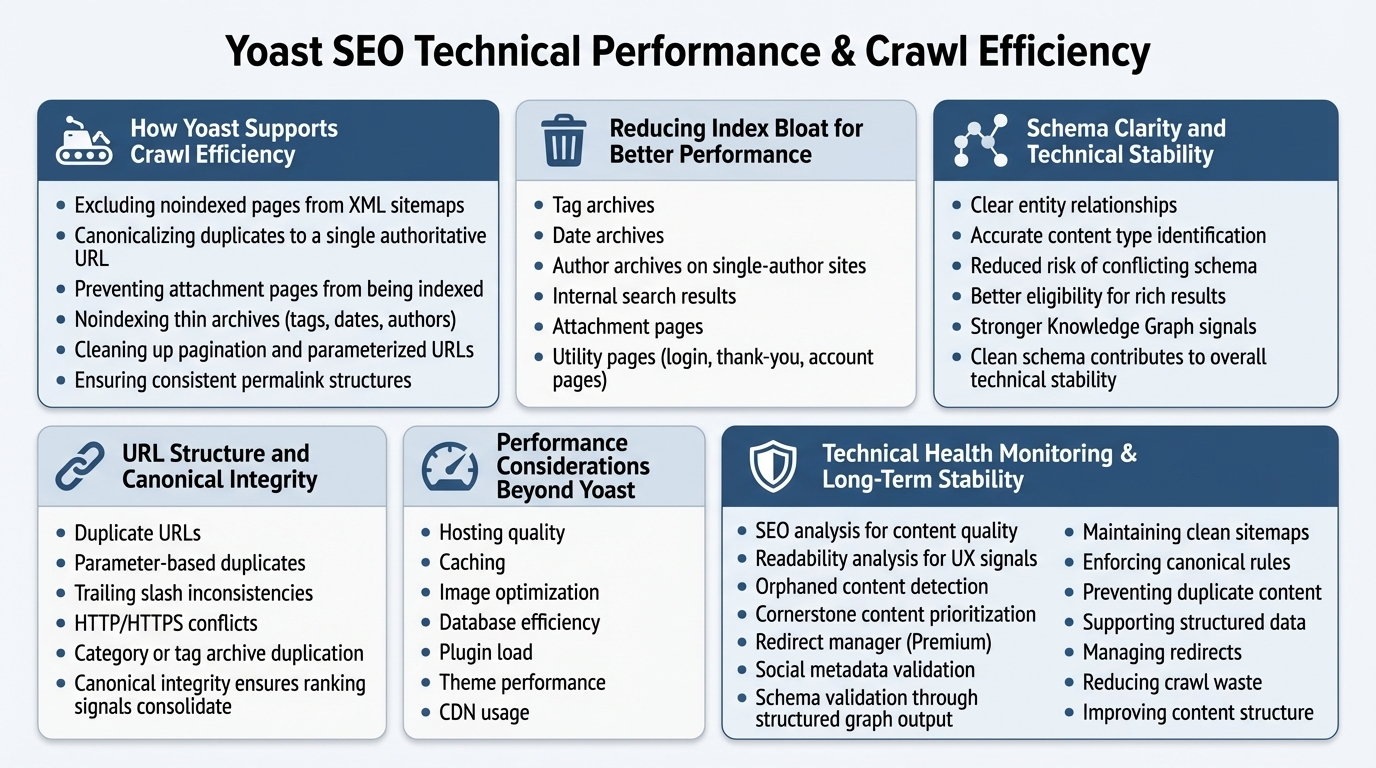
Technical performance is a foundational ranking factor, and Yoast SEO plays a central role in shaping how efficiently search engines crawl, interpret, and evaluate your site. While Yoast is not a speed‑optimization plugin, it influences performance through indexing rules, canonical logic, sitemap hygiene, schema clarity, and URL management. This pillar explains how Yoast contributes to technical health, how it supports crawl efficiency, and how to maintain a stable, search‑friendly WordPress environment.
How Yoast Supports Crawl Efficiency
Search engines allocate a limited crawl budget to each site. Yoast improves crawl efficiency by reducing unnecessary URLs and guiding crawlers toward your most valuable content. Key contributions include:
- Excluding noindexed pages from XML sitemaps
- Canonicalizing duplicates to a single authoritative URL
- Preventing attachment pages from being indexed
- Noindexing thin archives (tags, dates, authors)
- Cleaning up pagination and parameterized URLs
- Ensuring consistent permalink structures
These optimizations help Google spend its crawl budget on the pages that matter most.
Reducing Index Bloat for Better Performance
Index bloat occurs when Google indexes too many low‑value URLs. Yoast prevents this by allowing you to noindex:
- Tag archives
- Date archives
- Author archives on single‑author sites
- Internal search results
- Attachment pages
- Utility pages (login, thank‑you, account pages)
A lean index improves ranking potential and reduces crawl waste.
Schema Clarity and Technical Stability
Yoast’s structured data graph improves technical health by giving Google a clean, consistent understanding of your site. This reduces ambiguity and prevents indexing errors. Benefits include:
- Clear entity relationships
- Accurate content type identification
- Reduced risk of conflicting schema
- Better eligibility for rich results
- Stronger Knowledge Graph signals
Clean schema contributes to overall technical stability and improves how Google interprets your content.
URL Structure and Canonical Integrity
Yoast enforces canonical consistency across your site. This prevents:
- Duplicate URLs
- Parameter‑based duplicates
- Trailing slash inconsistencies
- HTTP/HTTPS conflicts
- Category or tag archive duplication
Canonical integrity ensures ranking signals consolidate instead of fragmenting across multiple URLs.
Performance Considerations Beyond Yoast
While Yoast influences crawl and index behavior, performance also depends on:
- Hosting quality
- Caching
- Image optimization
- Database efficiency
- Plugin load
- Theme performance
- CDN usage
Yoast complements these systems by ensuring search engines focus on optimized, high‑value pages rather than wasteful URLs.
Technical Health Monitoring with Yoast Tools
Yoast provides several tools that help maintain long‑term technical health:
- SEO analysis for content quality
- Readability analysis for UX signals
- Orphaned content detection
- Cornerstone content prioritization
- Redirect manager (Premium)
- Social metadata validation
- Schema validation through structured graph output
These tools help you identify weak points before they become SEO liabilities.
How Yoast Supports Long‑Term Stability
A technically healthy site is stable, predictable, and easy for search engines to understand. Yoast contributes by:
- Maintaining clean sitemaps
- Enforcing canonical rules
- Preventing duplicate content
- Supporting structured data
- Managing redirects
- Reducing crawl waste
- Improving content structure
This creates a strong foundation for sustainable SEO growth.