
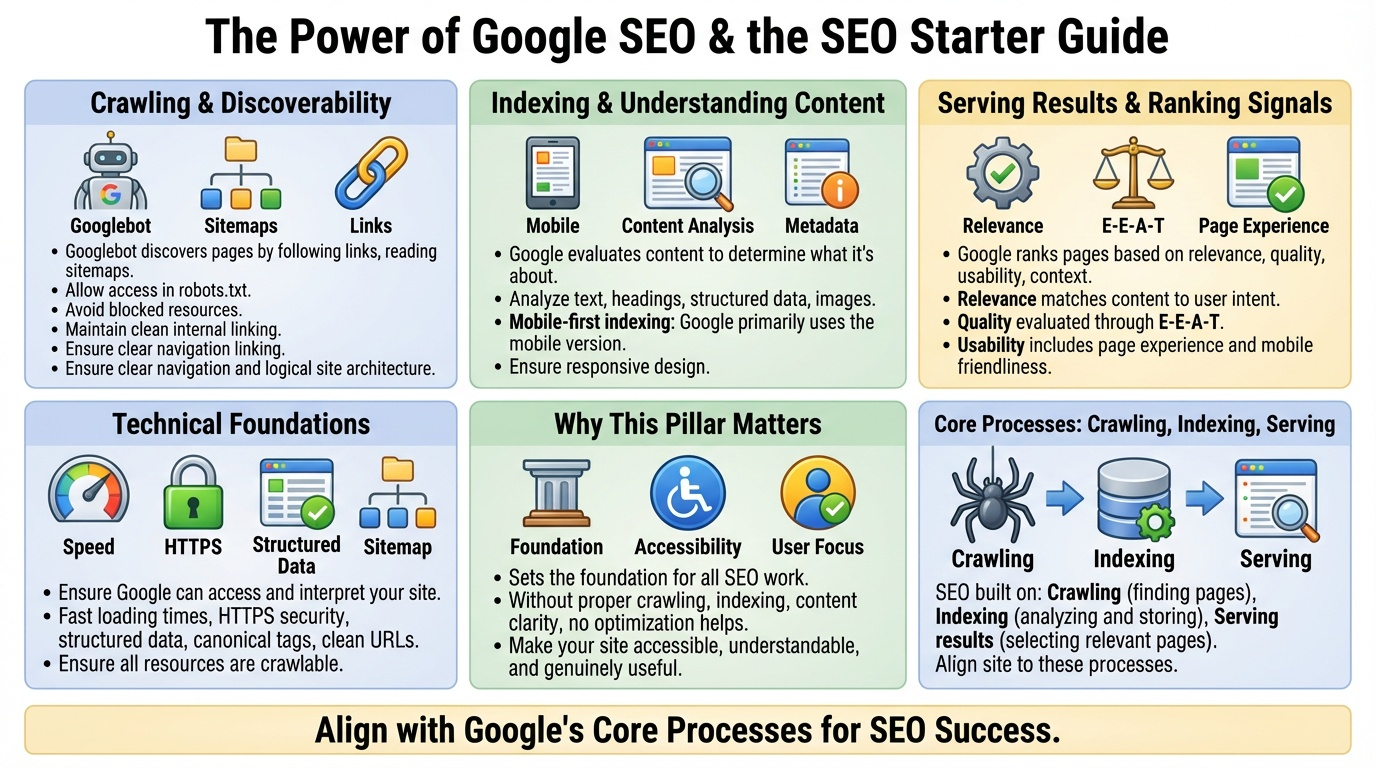
Google SEO begins with understanding how Google discovers, interprets, and ranks content. The SEO Starter Guide emphasizes that search is built on three core processes: crawling, indexing, and serving results. Crawling is how Googlebot finds pages across the web. Indexing is how Google analyzes and stores those pages. Serving results is how Google selects the most relevant pages for a user’s query. Effective SEO aligns your site with these processes so Google can access, understand, and trust your content.
Crawling & Discoverability
Googlebot discovers pages by following links, reading sitemaps, and processing URLs it already knows. Ensuring Google can crawl your site is the foundation of SEO. This includes allowing access in robots.txt, avoiding blocked resources, and maintaining a clean internal linking structure. Pages that are orphaned, deeply nested, or blocked by robots.txt may never be discovered. Google recommends using clear navigation, descriptive anchor text, and logical site architecture so crawlers can reach every important page.
Indexing & Understanding Content
Once crawled, Google evaluates content to determine what it’s about. This includes analyzing text, headings, structured data, images, and metadata. High‑quality indexing depends on clarity: descriptive titles, meaningful headings, readable text, and consistent language. Duplicate content, thin pages, or unclear signals can reduce indexing quality. Google also stresses mobile‑first indexing, meaning Google primarily uses the mobile version of your site to understand content. A responsive, mobile‑friendly design is no longer optional — it’s the baseline.
Serving Results & Ranking Signals
Google ranks pages based on relevance, quality, usability, and context. Relevance comes from matching content to user intent. Quality is evaluated through expertise, authoritativeness, and trustworthiness (E‑E‑A‑T). Usability includes page experience, mobile friendliness, and safe browsing. Context includes location, search history, and device type. Google does not use magic tricks or shortcuts — it rewards content that genuinely helps users. The SEO Starter Guide emphasizes focusing on users first, search engines second.
Creating Helpful, People‑First Content
Google encourages content that answers real questions, provides value, and demonstrates expertise. This includes using clear language, organizing content logically, and avoiding keyword stuffing. Pages should have a primary purpose, whether informational, transactional, or navigational. Google recommends writing for humans, not algorithms, and ensuring every page has a reason to exist. High‑quality content is original, comprehensive, and supported by trustworthy sources.
Technical Foundations
Technical SEO ensures Google can access and interpret your site. This includes fast loading times, HTTPS security, structured data, canonical tags, and clean URLs. Google recommends using sitemaps, avoiding intrusive interstitials, and ensuring all resources (CSS, JS, images) are crawlable. Technical stability improves both user experience and ranking potential.
Why This Pillar Matters
This pillar sets the foundation for all other SEO work. Without proper crawling, indexing, and content clarity, no amount of optimization will help. Google’s SEO Starter Guide is clear: SEO success begins with making your site accessible, understandable, and genuinely useful.