
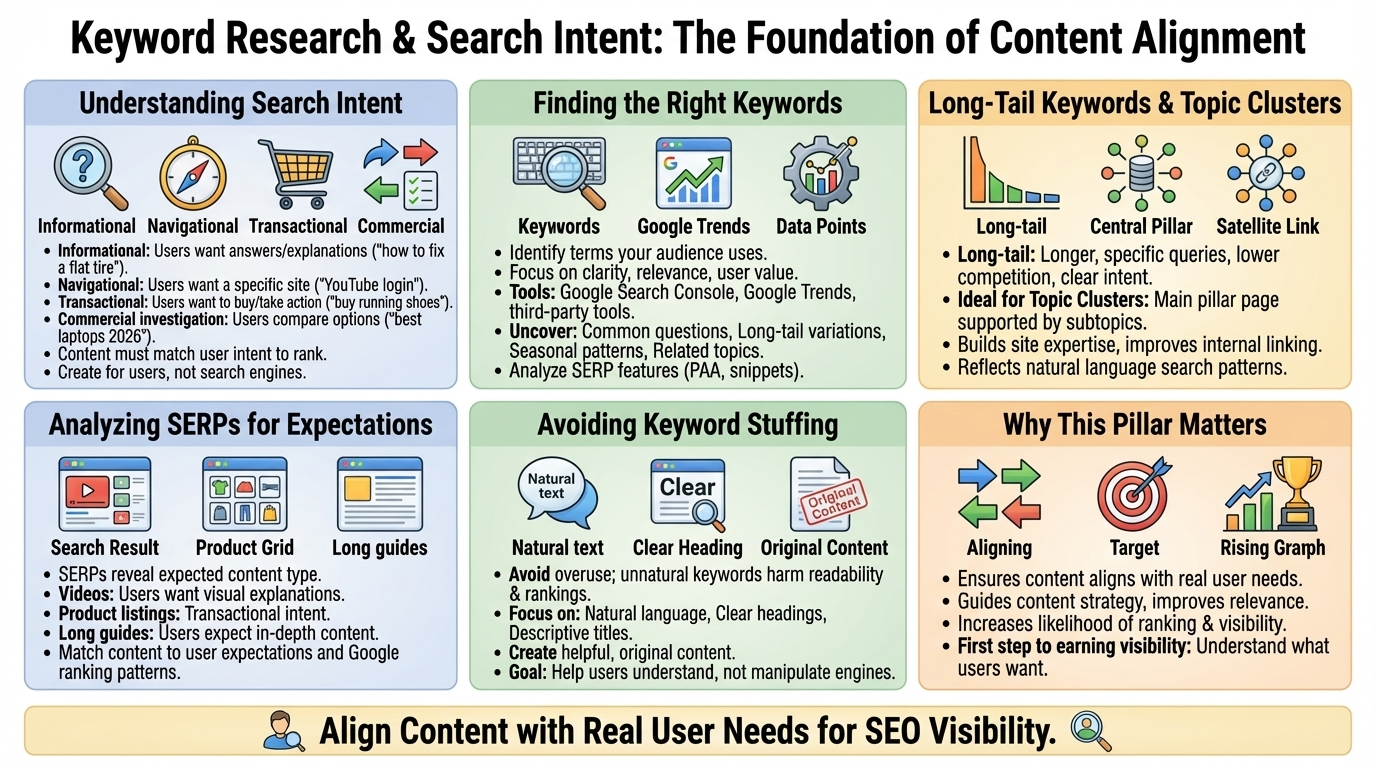
Keyword research is the foundation of Google SEO because it connects what people search for with the content you create. Google’s SEO Starter Guide emphasizes that effective SEO begins with understanding user intent and choosing keywords that reflect what users truly want. Keyword research is not about stuffing terms into pages—it’s about aligning your content with real human needs and the language people use when searching.
Understanding Search Intent
Google ranks pages based on how well they satisfy user intent. Intent generally falls into four categories:
- Informational — users want answers or explanations (“how to fix a flat tire”).
- Navigational — users want a specific site (“YouTube login”).
- Transactional — users want to buy or take action (“buy running shoes”).
- Commercial investigation — users compare options (“best laptops 2026”).
Matching content to intent is essential. A product page will not rank for an informational query, and a blog post will not rank for a transactional one. Google’s documentation stresses that content must be created for users first, not search engines.
Finding the Right Keywords
Keyword research begins with identifying the terms your audience uses. Google recommends focusing on clarity, relevance, and user value rather than chasing high‑volume terms. Tools like Google Search Console, Google Trends, and third‑party keyword tools help uncover:
- Common questions
- Long‑tail variations
- Seasonal patterns
- Related topics
- SERP features (People Also Ask, featured snippets)
The SEO Starter Guide highlights that small, incremental improvements across many pages can significantly improve visibility. Choosing the right keywords ensures those improvements are aligned with user demand.
Long‑Tail Keywords & Topic Clusters
Long‑tail keywords—longer, more specific queries—often have lower competition and clearer intent. They are ideal for building topic clusters, where a main pillar page is supported by related subtopics. This structure helps Google understand your site’s expertise and improves internal linking. Long‑tail terms also reflect natural language patterns, which align with how users search today.
Analyzing SERPs to Understand Expectations
Google’s results pages reveal what type of content users expect. For example:
- If the SERP shows videos, users likely want visual explanations.
- If the SERP shows product listings, intent is transactional.
- If the SERP shows long guides, users expect in‑depth content.
Studying the SERP helps you create content that matches both user expectations and Google’s ranking patterns.
Avoiding Keyword Stuffing
Google warns against overusing keywords unnaturally. Keyword stuffing harms readability and can reduce rankings. Instead, Google encourages:
- Natural language
- Clear headings
- Descriptive titles
- Helpful, original content
The goal is to help users understand your page—not manipulate search engines.
Why This Pillar Matters
Keyword research ensures your content aligns with real user needs. When combined with search intent analysis, it guides content strategy, improves relevance, and increases the likelihood of ranking. Google’s SEO Starter Guide makes it clear: understanding what users want is the first step toward creating content that earns visibility.