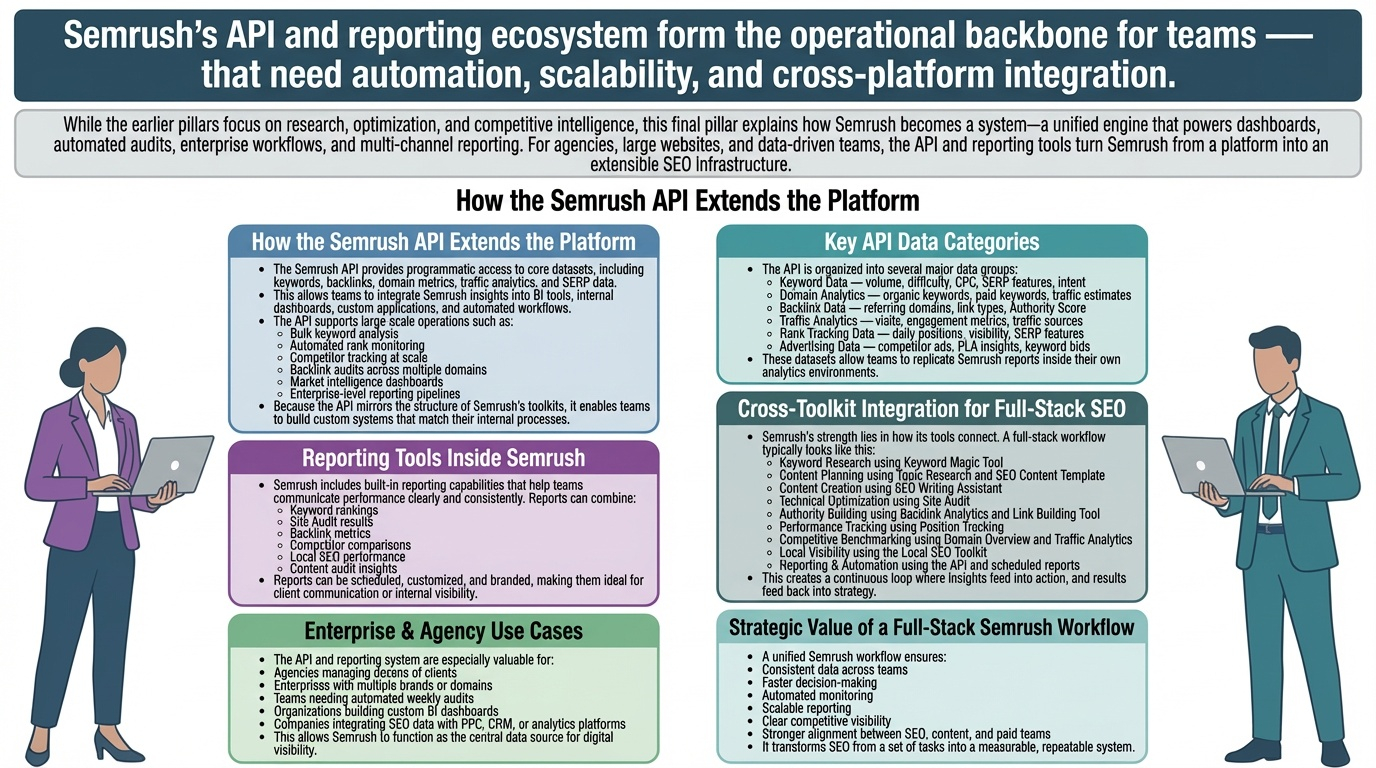
Semrush’s API and reporting ecosystem form the operational backbone for teams that need automation, scalability, and cross‑platform integration. While the earlier pillars focus on research, optimization, and competitive intelligence, this final pillar explains how Semrush becomes a system—a unified engine that powers dashboards, automated audits, enterprise workflows, and multi‑channel reporting. For agencies, large websites, and data‑driven teams, the API and reporting tools turn Semrush from a platform into an extensible SEO infrastructure.
How the Semrush API Extends the Platform
The Semrush API provides programmatic access to core datasets, including keywords, backlinks, domain metrics, traffic analytics, and SERP data. This allows teams to integrate Semrush insights into BI tools, internal dashboards, custom applications, and automated workflows. The API supports large‑scale operations such as:
- Bulk keyword analysis
- Automated rank monitoring
- Competitor tracking at scale
- Backlink audits across multiple domains
- Market intelligence dashboards
- Enterprise‑level reporting pipelines
Because the API mirrors the structure of Semrush’s toolkits, it enables teams to build custom systems that match their internal processes.
Key API Data Categories
The API is organized into several major data groups:
- Keyword Data — volume, difficulty, CPC, SERP features, intent
- Domain Analytics — organic keywords, paid keywords, traffic estimates
- Backlink Data — referring domains, link types, Authority Score
- Traffic Analytics — visits, engagement metrics, traffic sources
- Rank Tracking Data — daily positions, visibility, SERP features
- Advertising Data — competitor ads, PLA insights, keyword bids
These datasets allow teams to replicate Semrush reports inside their own analytics environments.
Reporting Tools Inside Semrush
Semrush includes built‑in reporting capabilities that help teams communicate performance clearly and consistently. Reports can combine:
- Keyword rankings
- Site Audit results
- Backlink metrics
- Competitor comparisons
- Local SEO performance
- Content audit insights
Reports can be scheduled, customized, and branded, making them ideal for client communication or internal visibility.
Cross‑Toolkit Integration for Full‑Stack SEO
Semrush’s strength lies in how its tools connect. A full‑stack workflow typically looks like this:
- Keyword Research using Keyword Magic Tool
- Content Planning using Topic Research and SEO Content Template
- Content Creation using SEO Writing Assistant
- Technical Optimization using Site Audit
- Authority Building using Backlink Analytics and Link Building Tool
- Performance Tracking using Position Tracking
- Competitive Benchmarking using Domain Overview and Traffic Analytics
- Local Visibility using the Local SEO Toolkit
- Reporting & Automation using the API and scheduled reports
This creates a continuous loop where insights feed into action, and results feed back into strategy.
Enterprise & Agency Use Cases
The API and reporting system are especially valuable for:
- Agencies managing dozens of clients
- Enterprises with multiple brands or domains
- Teams needing automated weekly audits
- Organizations building custom BI dashboards
- Companies integrating SEO data with PPC, CRM, or analytics platforms
This allows Semrush to function as the central data source for digital visibility.
Strategic Value of a Full‑Stack Semrush Workflow
A unified Semrush workflow ensures:
- Consistent data across teams
- Faster decision‑making
- Automated monitoring
- Scalable reporting
- Clear competitive visibility
- Stronger alignment between SEO, content, and paid teams
It transforms SEO from a set of tasks into a measurable, repeatable system.