
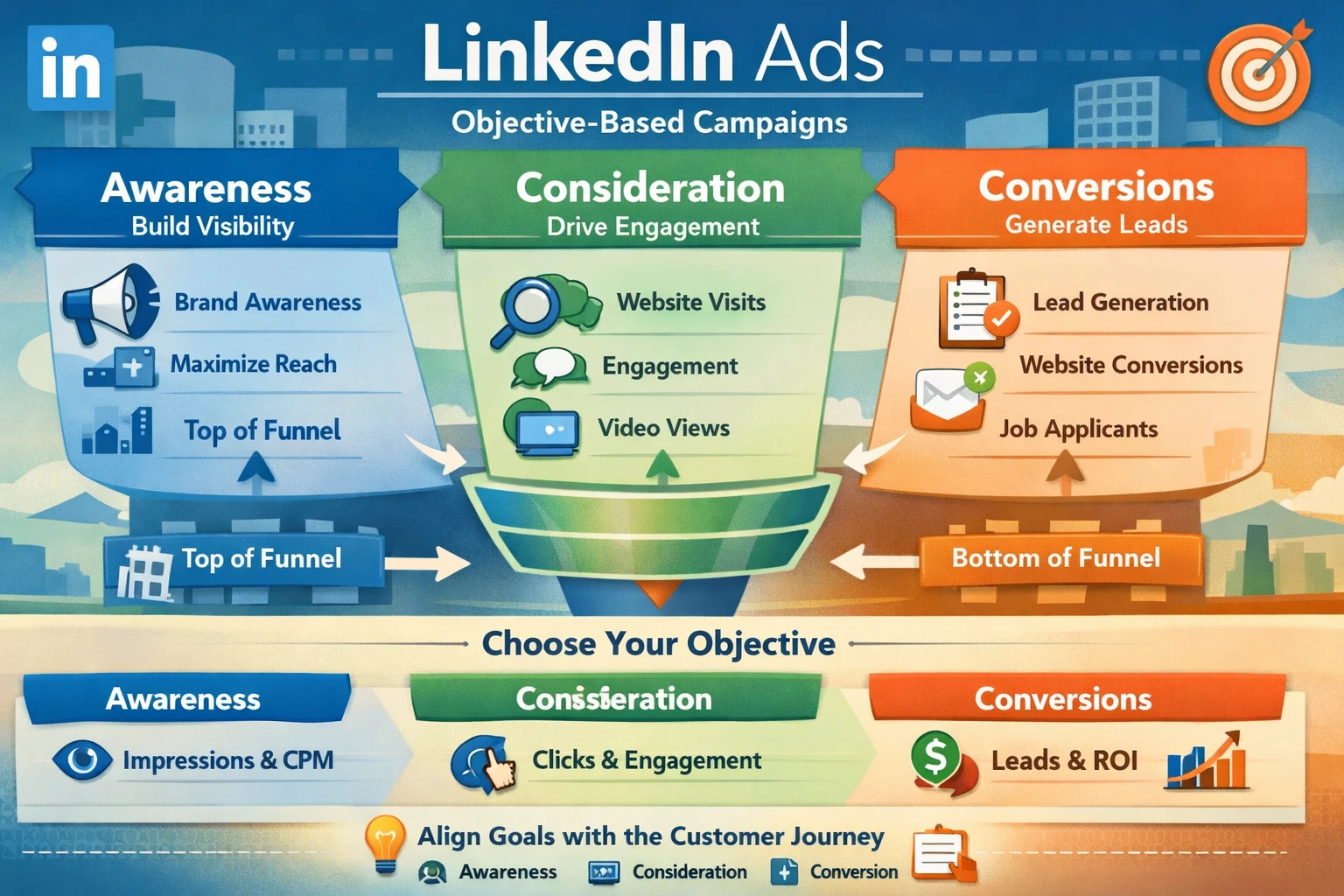
Objective‑based advertising is the foundation of LinkedIn Ads. Every campaign begins by selecting an objective that aligns with your business goals and the stage of your customer journey. LinkedIn’s algorithm optimizes delivery, bidding, and placements based on the objective you choose, making this the single most important decision in campaign setup. This pillar explains how objectives work, how to choose the right one, and how they influence performance, cost, and targeting.
Understanding LinkedIn’s Objective Framework
LinkedIn organizes objectives into three categories: Awareness, Consideration, and Conversions. Each category aligns with a different stage of the B2B funnel. Awareness objectives focus on reach and visibility. Consideration objectives drive engagement, traffic, and video views. Conversion objectives focus on lead generation, website conversions, and job applicants. Choosing the correct objective ensures your ads are shown to users most likely to take the desired action.
Awareness Objectives
Brand Awareness maximizes impressions and reach. This objective is ideal for top‑of‑funnel campaigns, product launches, or brand positioning. LinkedIn optimizes delivery to users who are more likely to view ads frequently. Awareness campaigns typically have lower CPCs but higher CPMs due to LinkedIn’s premium audience. Use this objective when your goal is visibility, not clicks or conversions.
Consideration Objectives
Consideration objectives include Website Visits, Engagement, and Video Views.
- Website Visits optimizes for clicks and is ideal for driving traffic to landing pages, blogs, or product pages.
- Engagement optimizes for likes, comments, shares, and follows—useful for building community and social proof.
- Video Views optimizes for users who watch videos, making it ideal for storytelling, product demos, or thought leadership.
These objectives work well for mid‑funnel education and nurturing.
Conversion Objectives
Conversion objectives include Lead Generation, Website Conversions, and Job Applicants.
- Lead Generation uses LinkedIn Lead Gen Forms, which auto‑populate user data for high conversion rates.
- Website Conversions optimizes for actions tracked by the LinkedIn Insight Tag, such as sign‑ups or demo requests.
- Job Applicants is designed for recruiting and talent acquisition.
Conversion objectives require strong landing pages, clear CTAs, and accurate conversion tracking.
How Objectives Influence Bidding & Optimization
LinkedIn’s algorithm optimizes delivery based on your chosen objective. For example, if you choose Website Visits, LinkedIn shows your ads to users more likely to click. If you choose Lead Generation, it prioritizes users who historically submit forms. Your bidding strategy—manual, automated, or target cost—also adapts to the objective. Choosing the wrong objective can dramatically increase costs and reduce performance.
Matching Objectives to Funnel Stages
A strong LinkedIn strategy uses multiple objectives across the funnel. Awareness builds reach. Consideration nurtures interest. Conversion objectives capture leads. Aligning objectives with your content and audience ensures efficient spend and predictable results. For example, a B2B SaaS company might run Awareness campaigns for thought leadership, Consideration campaigns for case studies, and Conversion campaigns for demo requests.
Measuring Objective Performance
Each objective has its own KPIs. Awareness focuses on impressions and CPM. Consideration focuses on CTR, engagement rate, or video completion rate. Conversion focuses on CPL, CPA, and conversion rate. Evaluating campaigns based on the correct KPIs ensures accurate performance assessment.