LinkedIn’s creative strategy is fundamentally different from Google, Meta, or TikTok because the platform is built around professional identity, expertise, and business intent. Creative must speak to rational value, industry relevance, and professional outcomes—not entertainment or impulse. This pillar explains how to structure messaging, choose the right creative angle, build authority, and align content with the B2B funnel.
Positioning Creative for a Professional Mindset
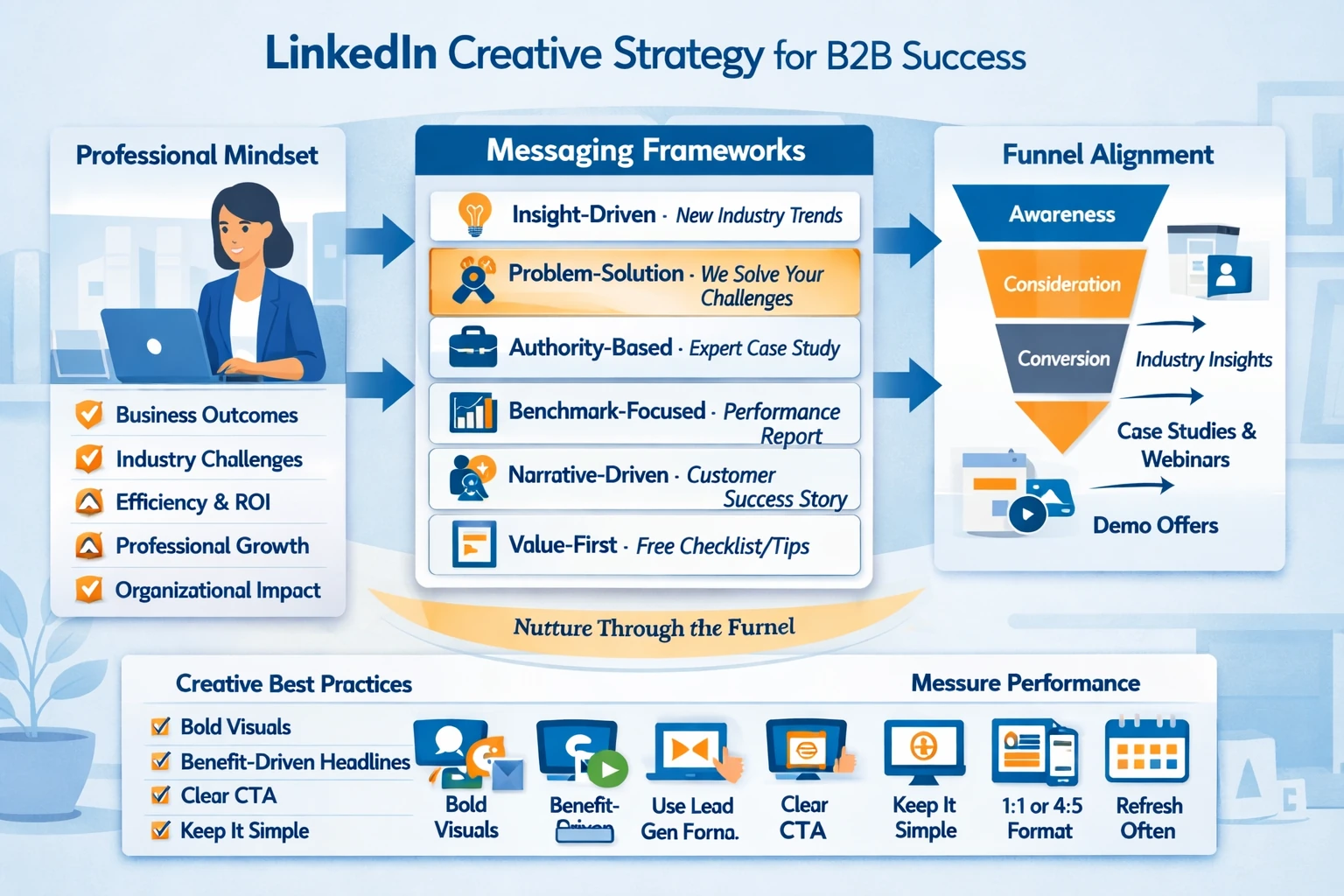
LinkedIn users scroll with a work‑focused mindset. They expect insights, frameworks, benchmarks, and solutions—not hype or gimmicks. Effective creative speaks to:
- Business outcomes
- Industry challenges
- Efficiency and ROI
- Professional growth
- Organizational impact
This means your ads should feel like mini value assets, not traditional ads. The more your creative resembles high‑quality thought leadership, the better it performs.
Core Messaging Frameworks for LinkedIn
Strong LinkedIn creative follows one of several proven frameworks:
- Insight‑Driven — Share a surprising statistic, trend, or industry shift.
- Problem–Solution — State a clear pain point and present your product as the fix.
- Authority‑Based — Use expertise, credentials, or case studies to build trust.
- Benchmark‑Focused — Offer comparisons, scorecards, or performance metrics.
- Narrative‑Driven — Tell a short story about a customer, challenge, or transformation.
- Value‑First — Give away a framework, checklist, or template directly in the ad.
These frameworks align with how professionals evaluate solutions and make decisions.
Creative Strategy by Funnel Stage
LinkedIn creative must match intent. A full‑funnel structure looks like this:
- Top of Funnel (Awareness)
- Thought leadership posts
- Industry trends
- Short videos
- Document previews
- Carousel frameworks
- Benchmark data
- Middle of Funnel (Consideration)
- Case studies
- Comparison guides
- Webinars
- ROI calculators
- Product explainers
- Bottom of Funnel (Conversion)
- Demo offers
- Consultations
- Free trials
- Lead Gen Forms
- Customer proof points
Misaligned creative—like pushing demos to cold audiences—drives up costs and reduces lead quality.
Creative Best Practices for LinkedIn
- Use bold, simple visuals with minimal text.
- Lead with value, not features.
- Keep headlines short and benefit‑driven.
- Use professional tone, not hype.
- Include clear CTAs aligned with funnel stage.
- Use square (1:1) or vertical (4:5) formats for maximum feed visibility.
- Refresh creative every 4–6 weeks to avoid fatigue.
LinkedIn rewards clarity, authority, and relevance.
Using Document Ads for Value‑First Creative
Document Ads are one of the highest‑performing formats on LinkedIn. They allow you to deliver value immediately through:
- Playbooks
- Checklists
- Frameworks
- Case studies
- Industry reports
Users can preview the document before submitting a Lead Gen Form, dramatically increasing conversion rates.
Creative Personalization for ABM
For Account‑Based Marketing, tailor creative to:
- Industry
- Company size
- Role or seniority
- Specific pain points
- Use cases
Personalized creative increases engagement and signals relevance to decision‑makers.
Testing Creative Variations
Test variations of:
- Hook (statistic vs. question vs. insight)
- Format (image vs. video vs. document)
- CTA (download vs. register vs. book demo)
- Value angle (ROI vs. efficiency vs. compliance)
LinkedIn’s algorithm favors ads with strong early engagement, so testing helps identify winners quickly.