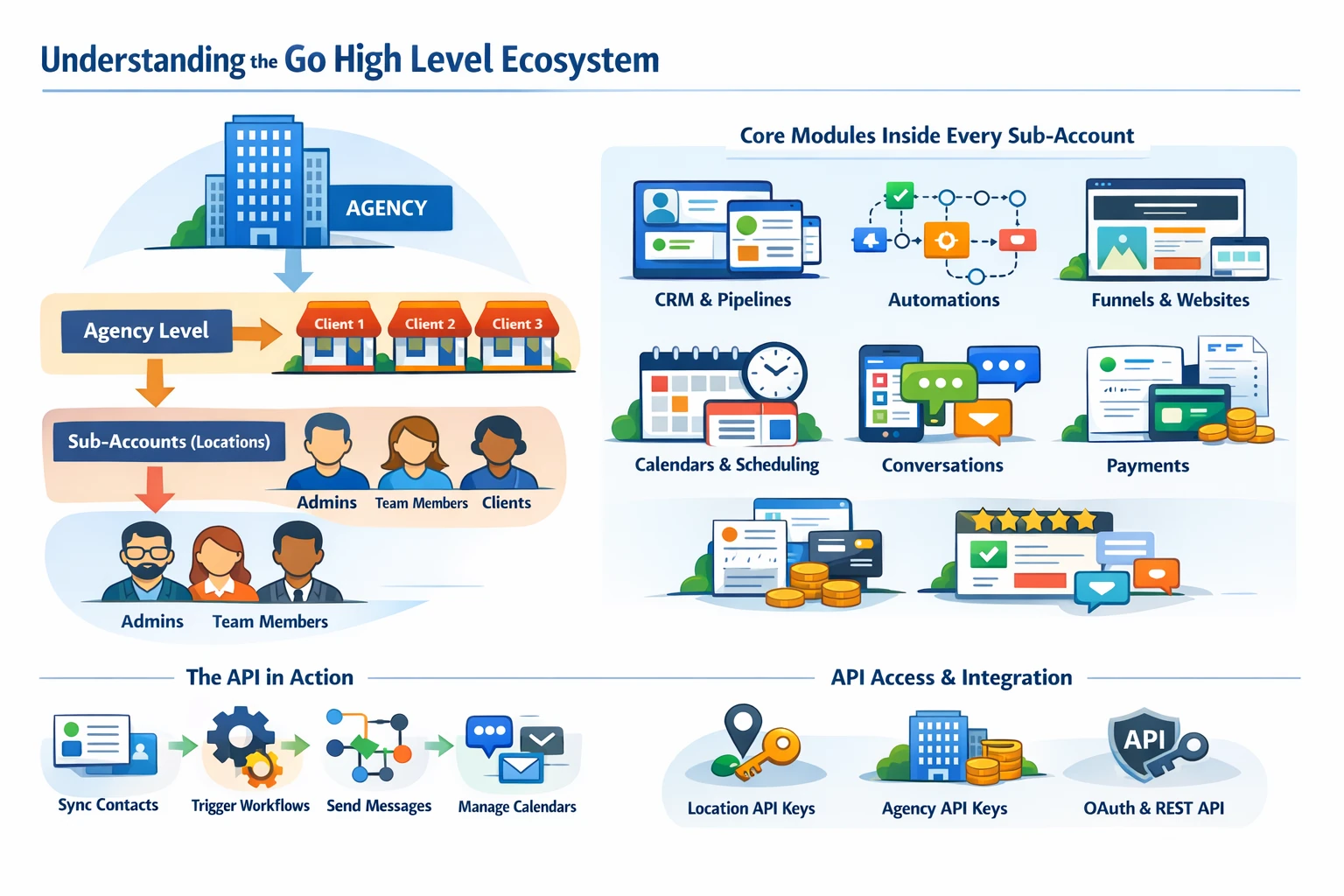
Go High Level (GHL) is a unified marketing, CRM, automation, and client‑management platform designed to replace dozens of disconnected tools. To build advanced systems, automations, and integrations—especially using the GHL API—you need a clear understanding of how the platform is structured. This foundational pillar explains the architecture, hierarchy, and core components that power the entire ecosystem.
Platform Hierarchy: Agency → Sub‑Accounts → Users
GHL is built on a three‑tier structure:
- Agency Level This is the master account. Agencies manage all sub‑accounts, permissions, snapshots, SaaS mode, and API access. Agency‑level API keys (available only on Agency Pro) unlock advanced integrations across multiple locations.
- Sub‑Accounts (Locations) Each client, brand, or business operates inside its own sub‑account. Sub‑accounts contain pipelines, workflows, calendars, funnels, websites, contacts, conversations, and reporting. Most API calls target the location level.
- Users Users include agency admins, client users, and team members. Permissions determine what each user can access.
Understanding this hierarchy is essential because API access, rate limits, and available endpoints differ depending on whether you’re using Location API Keys or Agency API Keys.
Core Modules Inside Every Sub‑Account
Each sub‑account contains the operational tools that run marketing and sales:
- CRM (Contacts & Pipelines) Store leads, track lifecycle stages, manage opportunities, and automate follow‑ups.
- Workflows (Automations) The automation engine that triggers actions based on events, tags, form submissions, purchases, and API calls.
- Funnels & Websites Drag‑and‑drop builder for landing pages, sales funnels, and full websites.
- Calendars & Scheduling Appointment booking, round‑robin scheduling, and automated reminders.
- Conversations Unified inbox for SMS, email, calls, WhatsApp, and social messaging.
- Payments Invoices, subscriptions, and order forms integrated with Stripe or other gateways.
- Reputation Management Review requests, monitoring, and reporting.
These modules are tightly integrated, allowing workflows to trigger actions across the entire system.
How the API Fits Into the Ecosystem
The HighLevel API enables developers to:
- Sync contacts, opportunities, and custom fields
- Trigger workflows or send events
- Manage calendars, appointments, and availability
- Send messages (SMS, email) programmatically
- Create or update tasks, notes, and activities
- Build external dashboards or reporting systems
- Integrate third‑party apps into GHL
- Automate multi‑location SaaS operations
The API is REST‑based and supports both Private Integration Tokens and OAuth 2.0, depending on whether you’re building internal tools or public Marketplace apps.
API Versioning & Deprecation
GHL has officially ended support for API V1, and all new development must use API V2, which includes:
- More endpoints
- Better security
- OAuth support
- Stricter rate limits
- Improved stability
Existing V1 integrations still function but receive no support.
Why Understanding the Ecosystem Matters
A deep understanding of GHL’s architecture ensures:
- Cleaner automation design
- More stable API integrations
- Better multi‑location management
- Faster troubleshooting
- Scalable SaaS deployments
- More predictable client outcomes
This foundation is essential before diving into workflows, API endpoints, or advanced automation.