
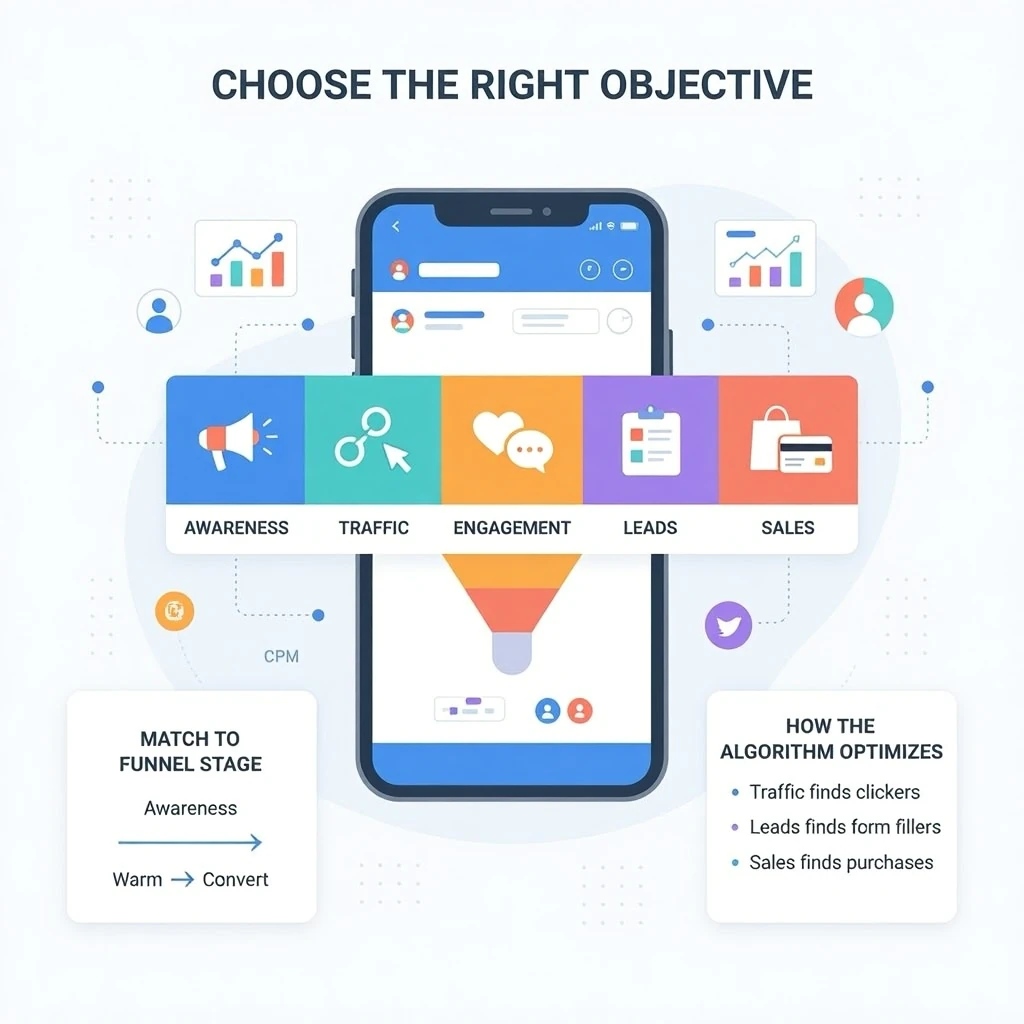
Choosing the right campaign objective is the foundation of every Meta Ads strategy. The objective determines how the algorithm optimizes delivery, what signals it prioritizes, and which users it seeks out. Even with strong creative and targeting, a misaligned objective can cripple performance. This pillar explains how Meta’s objective system works and how to select the right one for your business goals.
How Objectives Shape Meta’s Algorithm
Meta’s delivery system is built around machine learning. When you choose an objective, you’re telling the algorithm what outcome matters most. Meta then finds people most likely to perform that action based on billions of behavioral signals.
For example:
- A Traffic campaign finds clickers, not buyers.
- A Leads campaign finds form fillers, not necessarily qualified prospects.
- A Sales campaign finds purchasers, even if CPM is higher.
The objective you choose directly influences who sees your ads and what results you get.
Awareness Objectives
Awareness campaigns are designed to maximize reach and visibility. They work best for:
- New brands
- Product launches
- Broad-market messaging
- Top-of-funnel warming
Awareness optimization focuses on impressions and reach, not engagement or conversions. These campaigns feed the algorithm with early signals that support later retargeting.
Traffic Objective
Traffic campaigns optimize for link clicks or landing page views. They are useful when you need:
- Website visits
- Blog traffic
- Pixel warming
- Low-cost top-of-funnel activity
However, traffic campaigns often attract low-intent users. They should not be used for sales or lead generation unless paired with strong retargeting.
Engagement Objective
Engagement campaigns optimize for:
- Post interactions
- Video views
- Comments
- Shares
- Page follows
These campaigns are ideal for building social proof, boosting content, and warming audiences before conversion-focused campaigns.
Leads Objective
Lead generation campaigns optimize for form submissions, either through:
- Instant Forms
- Messenger
- Calls
- Website forms
They are effective for service businesses, local businesses, and B2B funnels. However, lead quality varies depending on form length, targeting, and offer strength.
App Promotion Objective
This objective is designed for mobile app installs and in-app actions. Meta optimizes for:
- Installs
- Registrations
- Purchases
- Retention events
It’s essential for SaaS, mobile games, and subscription apps.
Sales Objective
Sales campaigns are the highest-intent objective. Meta optimizes for:
- Purchases
- Add-to-carts
- Initiate checkouts
- Subscription conversions
This objective requires strong tracking (Pixel + CAPI) and enough conversion volume for stable learning. It is the backbone of e-commerce and high-intent funnels.
Choosing the Right Objective
The best advertisers match objectives to funnel stages:
- Awareness → reach new audiences
- Engagement/Traffic → warm them
- Leads/Sales → convert them
Trying to skip stages often results in higher costs and unstable performance.
Strategic Takeaway
Campaign objectives are not interchangeable. They determine who sees your ads, how Meta optimizes delivery, and what results you get. When objectives align with your funnel and business goals, the algorithm becomes more efficient, more predictable, and easier to scale.