
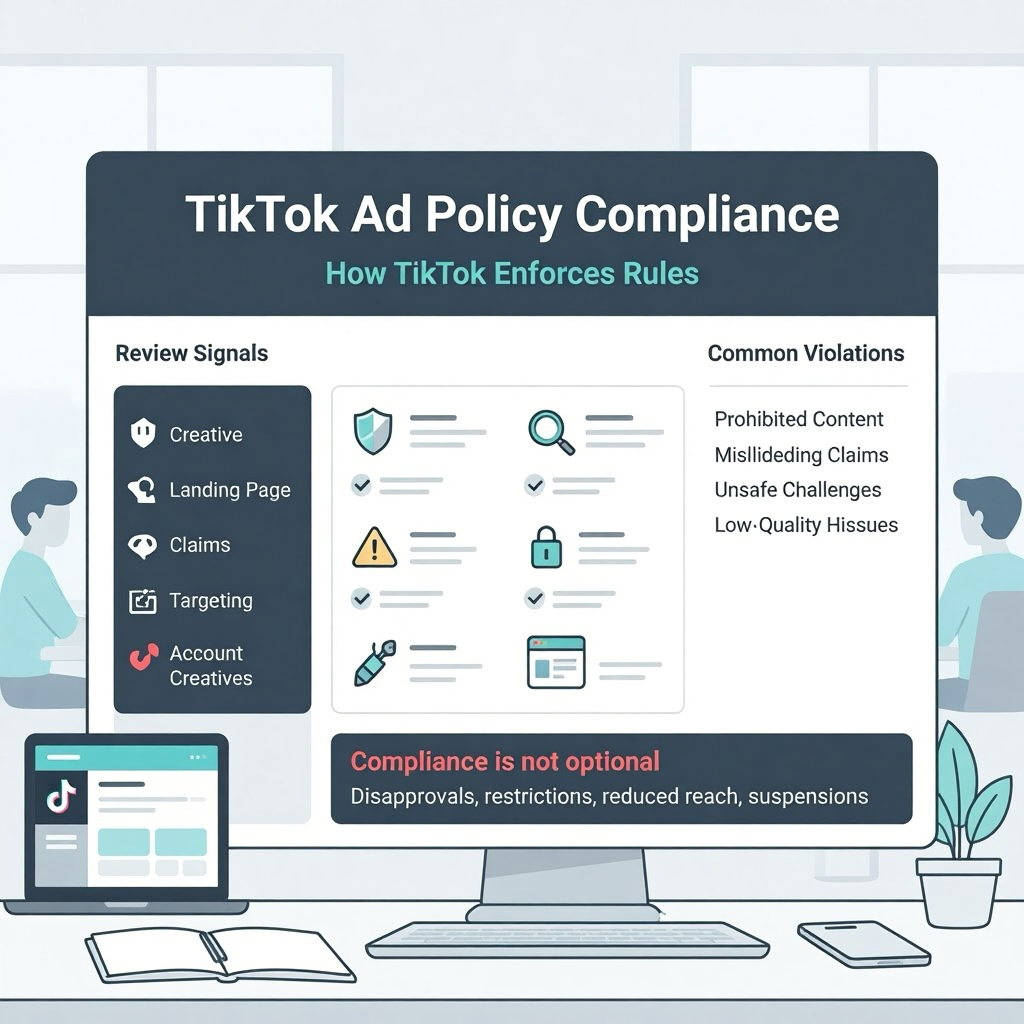
TikTok enforces strict advertising policies to protect users, maintain platform integrity, and ensure a safe environment for creators and brands. Compliance is not optional—violations can lead to ad disapprovals, delivery restrictions, reduced reach, or full account suspensions. Understanding TikTok’s rules helps you avoid disruptions, maintain stable performance, and scale confidently.
How TikTok Enforces Ad Policies
TikTok uses automated review systems and human moderators to evaluate ads before and during delivery. The review process checks:
- Creative content
- Landing pages
- Product claims
- Targeting choices
- Account behavior
- Historical compliance patterns
Ads can be flagged at any time, even after approval, if new violations are detected or if user reports trigger a secondary review.
Core TikTok Advertising Policies
TikTok’s policies fall into several major categories that advertisers must follow:
- Prohibited content — illegal products, weapons, adult content, unsafe supplements, tobacco, and unapproved medical claims.
- Restricted content — alcohol, financial services, dating apps, and weight‑loss products (allowed only with strict rules and regional limitations).
- Misleading claims — exaggerated results, unverified testimonials, fake urgency, or deceptive pricing.
- User safety — no dangerous activities, harmful challenges, or content that encourages risky behavior.
- Privacy and data use — no unauthorized data collection, misleading opt‑ins, or unclear consent practices.
- Creative standards — no flashing content, excessive text, or low‑quality visuals that disrupt user experience.
TikTok updates these policies frequently, so ongoing compliance checks are essential.
Creative Compliance Requirements
TikTok creatives must follow specific rules to avoid disapproval:
- No before‑and‑after images that imply unrealistic transformations.
- No claims like “guaranteed results,” “instant cure,” or “lose 20 lbs in 2 weeks.”
- No medical, financial, or legal advice presented as guaranteed outcomes.
- No shock imagery, graphic content, or fear‑based messaging.
- No misleading buttons or UI elements that mimic system notifications.
- No unauthorized use of copyrighted music or creator content.
Creatives should feel native, safe, and honest—TikTok prioritizes user trust above all.
Landing Page Compliance
TikTok reviews landing pages with the same scrutiny as ads. Violations include:
- Inconsistent product information
- Hidden fees or unclear pricing
- Fake countdown timers
- Misleading claims not supported by evidence
- Slow or broken pages
- Incomplete contact information
- Unsecured checkout (no HTTPS)
A compliant landing page must be transparent, functional, and aligned with the ad’s message.
Account Safety & Risk Prevention
Accounts can be flagged for patterns of behavior, not just individual violations. Risk factors include:
- Repeated ad disapprovals
- High user report rates
- Sudden spikes in spend or activity
- Multiple policy violations across creatives
- Suspicious payment activity
- Poor fulfillment or customer complaints (for TikTok Shop)
Maintaining a clean compliance history improves review speed and reduces the likelihood of restrictions.
Best Practices for Long‑Term Account Health
Stable accounts follow predictable, safe workflows:
- Pre‑screen creatives for policy risks
- Avoid aggressive claims or exaggerated promises
- Maintain consistent branding and messaging
- Keep landing pages updated and transparent
- Use TikTok‑safe creators and scripts
- Monitor disapproval patterns to identify recurring issues
- Document all product claims with real evidence
Compliance is not just about avoiding penalties—it’s about building trust with users and the platform.