
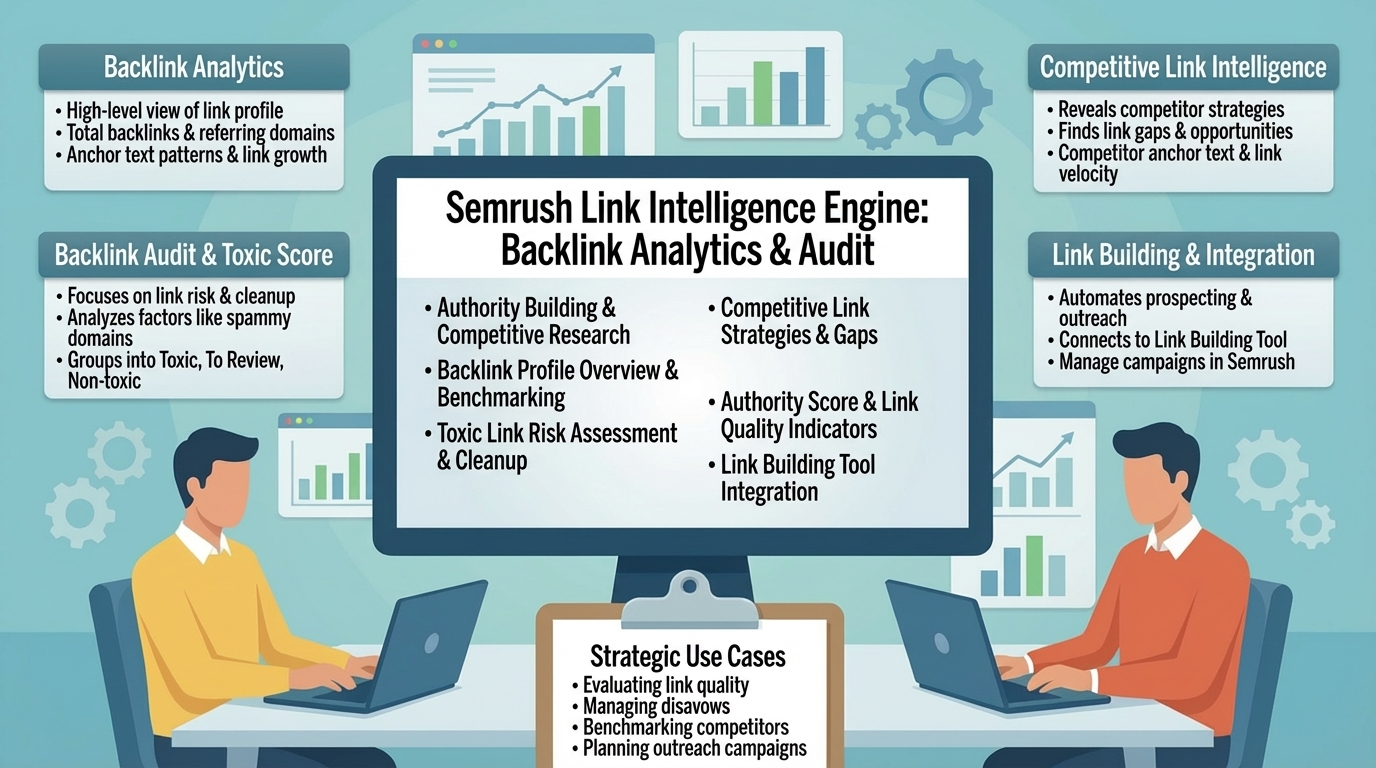
Backlink Analytics and Backlink Audit form Semrush’s link‑intelligence engine, giving marketers a complete view of their backlink profile, competitor link strategies, and toxic link risks. Because backlinks remain one of the strongest ranking signals in Google’s algorithm, Semrush’s link tools are central to authority building, competitive research, and long‑term SEO stability. Together, they help you understand where your authority comes from, where competitors gain their advantage, and which links may be harming your site.
How Backlink Analytics Supports SEO Strategy
Backlink Analytics provides a high‑level view of any domain’s link profile, including total backlinks, referring domains, authority distribution, anchor text patterns, and link growth over time. It is designed for competitive intelligence as much as for self‑analysis. By comparing your link profile against competitors, you can identify gaps, opportunities, and link sources that drive ranking strength in your niche. This makes Backlink Analytics essential for planning link‑building campaigns and evaluating the competitive landscape.
Authority Score & Link Quality Indicators
Semrush uses Authority Score as its primary metric for evaluating domain strength. It is a composite score based on link quality, organic traffic, and spam indicators. Authority Score helps you quickly assess the value of a potential backlink source and benchmark your domain against competitors. Additional link quality indicators include:
- Referring domain authority
- Follow vs. nofollow ratios
- Link type distribution (text, image, form, frame)
- New vs. lost links
- Top linking pages
- Anchor text diversity
These metrics help determine whether your link profile is natural, diverse, and competitive.
Backlink Audit & Toxic Score
Backlink Audit focuses on link risk and cleanup. It evaluates your backlink profile for potentially harmful links using Semrush’s Toxic Score, which analyzes dozens of risk factors such as:
- Links from spammy or penalized domains
- Unnatural anchor text patterns
- Links from irrelevant or low‑quality sites
- Suspicious link velocity
- Private blog networks (PBN‑like patterns)
The tool groups links into categories such as “potentially toxic,” “to review,” and “non‑toxic,” helping you prioritize cleanup efforts. It also integrates with Google Search Console and Google Disavow workflows, making it easier to manage link risk at scale.
Competitive Link Intelligence
Backlink Analytics includes features that reveal competitor link strategies:
- Referring domains competitors have but you don’t
- High‑authority domains linking to multiple competitors
- Competitor link velocity
- Competitor anchor text patterns
- Top pages earning links in your niche
This intelligence helps you identify link opportunities and understand what types of content attract backlinks in your industry.
Link Building Tool Integration
Semrush connects Backlink Analytics and Backlink Audit to the Link Building Tool, which automates prospecting, outreach tracking, and relationship management. You can import competitor link sources, filter by Authority Score, and manage outreach campaigns directly within Semrush. This creates a full link‑building workflow from discovery to execution.
Strategic Use Cases
Backlink Analytics and Backlink Audit support several high‑impact workflows:
- Evaluating link quality and authority
- Identifying toxic links and managing disavows
- Benchmarking competitors’ link profiles
- Finding link gaps and opportunities
- Planning outreach campaigns
- Monitoring link growth and loss
- Strengthening authority for competitive keywords
These tools help ensure your link profile is both strong and safe.