
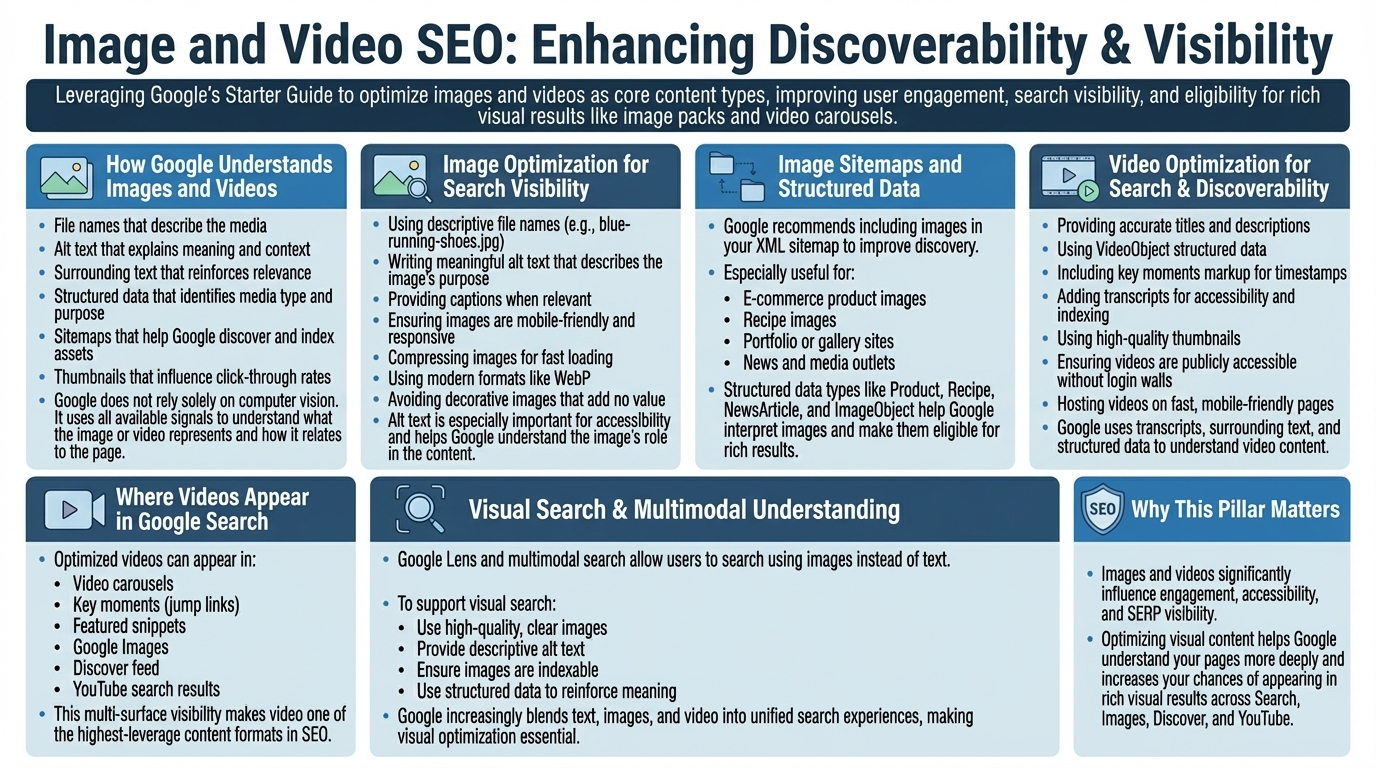
Google’s SEO Starter Guide highlights that images and videos are not just supporting elements—they are core content types that influence discoverability, user engagement, and search visibility. As Google increasingly blends visual results into the SERP (image packs, video carousels, Web Stories, visual product listings), optimizing visual content becomes essential for modern SEO. This pillar explains how Google understands visual media, how to make it discoverable, and how to align it with search intent.
How Google Understands Images and Videos
Google relies on multiple signals to interpret visual content:
- File names that describe the media
- Alt text that explains meaning and context
- Surrounding text that reinforces relevance
- Structured data that identifies media type and purpose
- Sitemaps that help Google discover and index assets
- Thumbnails that influence click‑through rates
Google does not rely solely on computer vision. It uses all available signals to understand what the image or video represents and how it relates to the page.
Image Optimization for Search Visibility
Google emphasizes that image SEO is about clarity, accessibility, and context. Key practices include:
- Using descriptive file names (e.g., blue-running-shoes.jpg)
- Writing meaningful alt text that describes the image’s purpose
- Providing captions when relevant
- Ensuring images are mobile‑friendly and responsive
- Compressing images for fast loading
- Using modern formats like WebP
- Avoiding decorative images that add no value
Alt text is especially important for accessibility and helps Google understand the image’s role in the content.
Image Sitemaps and Structured Data
Google recommends including images in your XML sitemap to improve discovery. This is especially useful for:
- E‑commerce product images
- Recipe images
- Portfolio or gallery sites
- News and media outlets
Structured data types like Product, Recipe, NewsArticle, and ImageObject help Google interpret images and make them eligible for rich results.
Video Optimization for Search & Discoverability
Videos can appear in Google Search, Google Images, Google Discover, and YouTube. To maximize visibility, Google recommends:
- Providing accurate titles and descriptions
- Using VideoObject structured data
- Including key moments markup for timestamps
- Adding transcripts for accessibility and indexing
- Using high‑quality thumbnails
- Ensuring videos are publicly accessible without login walls
- Hosting videos on fast, mobile‑friendly pages
Google uses transcripts, surrounding text, and structured data to understand video content.
Where Videos Appear in Google Search
Optimized videos can appear in:
- Video carousels
- Key moments (jump links)
- Featured snippets
- Google Images
- Discover feed
- YouTube search results
This multi‑surface visibility makes video one of the highest‑leverage content formats in SEO.
Visual Search & Multimodal Understanding
Google Lens and multimodal search allow users to search using images instead of text. To support visual search:
- Use high‑quality, clear images
- Provide descriptive alt text
- Ensure images are indexable
- Use structured data to reinforce meaning
Google increasingly blends text, images, and video into unified search experiences, making visual optimization essential.
Why This Pillar Matters
Images and videos significantly influence engagement, accessibility, and SERP visibility. Optimizing visual content helps Google understand your pages more deeply and increases your chances of appearing in rich visual results across Search, Images, Discover, and YouTube.