
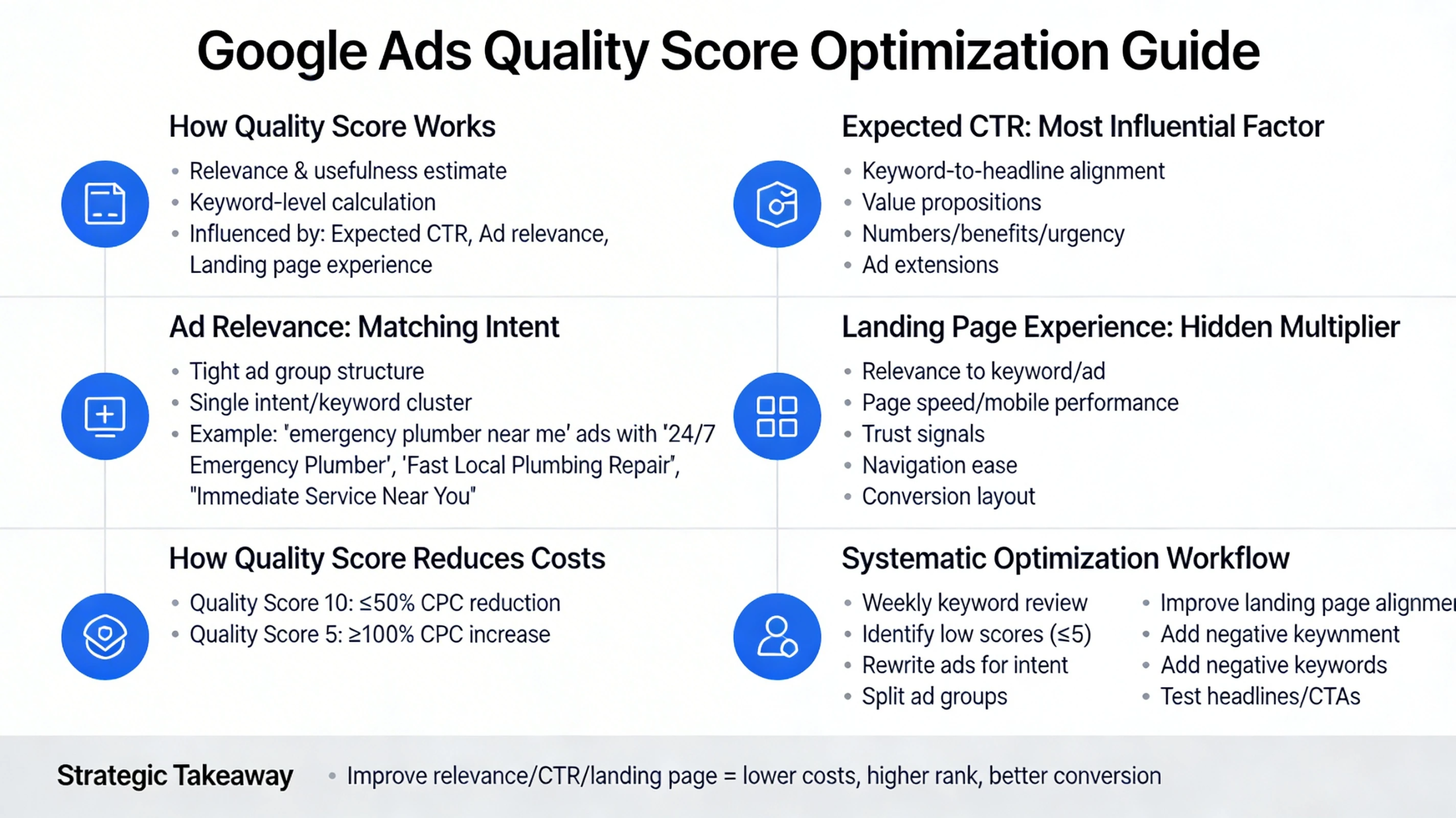
Quality Score is one of the most powerful cost‑reduction levers in Google Ads. It determines how much you pay per click, how often your ads show, and how competitive you are in the auction. Two advertisers can bid the same amount, yet the one with a higher Quality Score will consistently pay less and rank higher. This pillar breaks down how Quality Score works, how Google evaluates it, and how to systematically improve it across campaigns.
How Quality Score Works
Quality Score is Google’s estimate of the relevance and usefulness of your ads to the user. It is calculated at the keyword level and influenced by three core components:
- Expected CTR — how likely users are to click your ad based on historical performance and relevance.
- Ad relevance — how closely your ad matches the user’s search intent and keyword theme.
- Landing page experience — how helpful, fast, and trustworthy your landing page is.
Google uses these signals to determine Ad Rank, which decides your position and CPC. A higher Quality Score means you pay less for the same position.
Expected CTR: The Most Influential Factor
Expected CTR is heavily influenced by:
- Strong keyword‑to‑headline alignment
- Clear, compelling value propositions
- Use of numbers, benefits, and urgency
- Ad extensions that increase visibility
- Historical performance of your account
Google rewards ads that consistently attract clicks. Improving CTR is often the fastest way to lift Quality Score.
Ad Relevance: Matching Intent
Ad relevance measures how closely your ad matches the keyword theme. The key to improving relevance is tight ad group structure. Each ad group should focus on a single intent or keyword cluster so the ads can speak directly to the user’s search.
For example:
- Ad group: “emergency plumber near me”
- Headlines: “24/7 Emergency Plumber”, “Fast Local Plumbing Repair”, “Immediate Service Near You”
When the ad mirrors the search language, relevance increases, CTR rises, and Quality Score improves.
Landing Page Experience: The Hidden Multiplier
Google evaluates landing pages based on:
- Relevance to the keyword and ad
- Page speed and mobile performance
- Transparency and trust signals
- Ease of navigation
- Conversion‑friendly layout
A landing page that loads slowly or feels generic will drag down Quality Score even if your ads are excellent. High‑intent pages should include:
- Clear headline matching the keyword
- Strong CTA above the fold
- Trust badges, reviews, or guarantees
- Fast load times
- Mobile‑optimized layout
Improving landing page experience often produces long‑term gains across the entire account.
How Quality Score Reduces Costs
A higher Quality Score lowers your CPC because Google rewards relevance. For example:
- Quality Score 10 can reduce CPC by up to 50%
- Quality Score 5 can increase CPC by 100%
This means optimizing Quality Score is not just about performance—it’s about profitability.
A Systematic Optimization Workflow
A professional Quality Score optimization process includes:
- Reviewing keyword‑level Quality Scores weekly
- Identifying low‑scoring keywords (≤5)
- Rewriting ads to match keyword intent
- Splitting large ad groups into tighter clusters
- Improving landing page alignment
- Adding negative keywords to protect relevance
- Testing new headlines and CTAs
This workflow ensures continuous improvement and prevents wasted spend.
Strategic Takeaway
Quality Score is a multiplier that affects every part of your Google Ads performance. When you improve relevance, CTR, and the landing page experience, you create a system in which you pay less, rank higher, and convert more efficiently.