
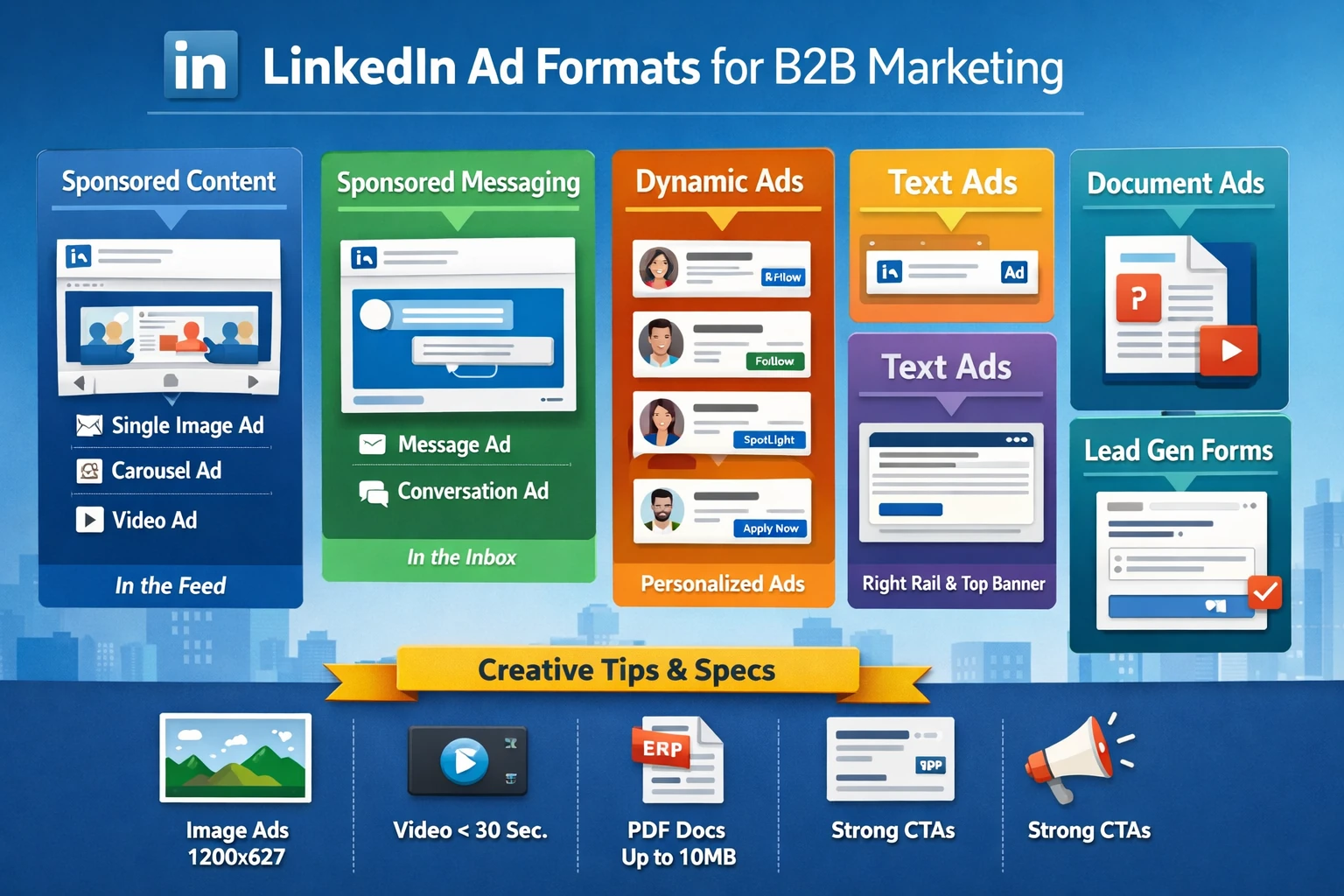
LinkedIn offers a range of creative formats designed for B2B storytelling, lead generation, and professional engagement. Because LinkedIn users are in a work mindset, creative must be clear, authoritative, and value‑driven. Each ad format has its own specifications, strengths, and best‑fit use cases. This pillar explains how each format works, when to use it, and the technical requirements you must follow to ensure proper delivery and performance.
Sponsored Content (Feed Ads)
Sponsored Content is LinkedIn’s primary ad format and appears directly in the feed. It includes single image ads, carousel ads, and video ads. These formats are ideal for awareness, thought leadership, and lead generation.
- Single Image Ads use a static visual with a headline and intro text. They are versatile and work well across all objectives.
- Carousel Ads allow multiple cards for storytelling, product showcases, or step‑by‑step narratives.
- Video Ads support brand storytelling, demos, testimonials, and event promotion.
Sponsored Content is the most scalable format and typically delivers the best CTR and engagement.
Sponsored Messaging (Inbox Ads)
Sponsored Messaging includes Message Ads and Conversation Ads. These formats deliver directly to a user’s LinkedIn inbox.
- Message Ads send a single, personalized message with a CTA button.
- Conversation Ads offer multi‑branch experiences with multiple CTAs, ideal for guiding users through choices.
Messaging formats work best for mid‑funnel and bottom‑funnel campaigns such as event invites, gated content, or demo offers. They should feel personal and value‑driven, not salesy.
Dynamic Ads
Dynamic Ads personalize creative automatically using profile data such as name, job title, or company. They appear in the right rail and include:
- Follower Ads to grow your LinkedIn Page audience.
- Spotlight Ads to drive traffic or conversions.
- Job Ads for recruiting.
Dynamic Ads are highly attention‑grabbing due to personalization but have limited placement and scale.
Text Ads
Text Ads appear in the right rail or top banner. They are simple, low‑cost, and ideal for testing messaging or running always‑on brand campaigns. While CTR is low, CPC can be efficient. Text Ads work well for remarketing or niche B2B audiences.
Document Ads
Document Ads allow you to promote PDFs, guides, whitepapers, or case studies directly in the feed. Users can preview the document before submitting a Lead Gen Form. This format is extremely effective for B2B lead generation because it delivers value upfront and reduces friction.
Lead Gen Forms
Lead Gen Forms can be attached to Sponsored Content, Video Ads, Carousel Ads, and Document Ads. They auto‑populate user data from LinkedIn profiles, dramatically increasing conversion rates. Lead Gen Forms are ideal for webinars, demos, reports, and gated content. They require strong value propositions and clear CTAs.
Creative Specifications
Each format has strict specifications:
- Single Image Ads: 1200×627 or 1080×1080, JPG/PNG, <5MB
- Carousel Ads: 1080×1080 per card, 2–10 cards
- Video Ads: MP4, 3 seconds–30 minutes, recommended <30 seconds
- Message Ads: 1,500 characters max, 1 CTA
- Conversation Ads: multiple CTAs, branching paths
- Document Ads: PDF up to 100 pages or 10MB
Following specs ensures proper rendering across devices.
Creative Best Practices
- Use bold, simple visuals with minimal text.
- Lead with value: insights, frameworks, benchmarks, or offers.
- Keep headlines short and benefit‑driven.
- Use professional tone and clear CTAs.
- Test multiple variations to identify winning creative.