
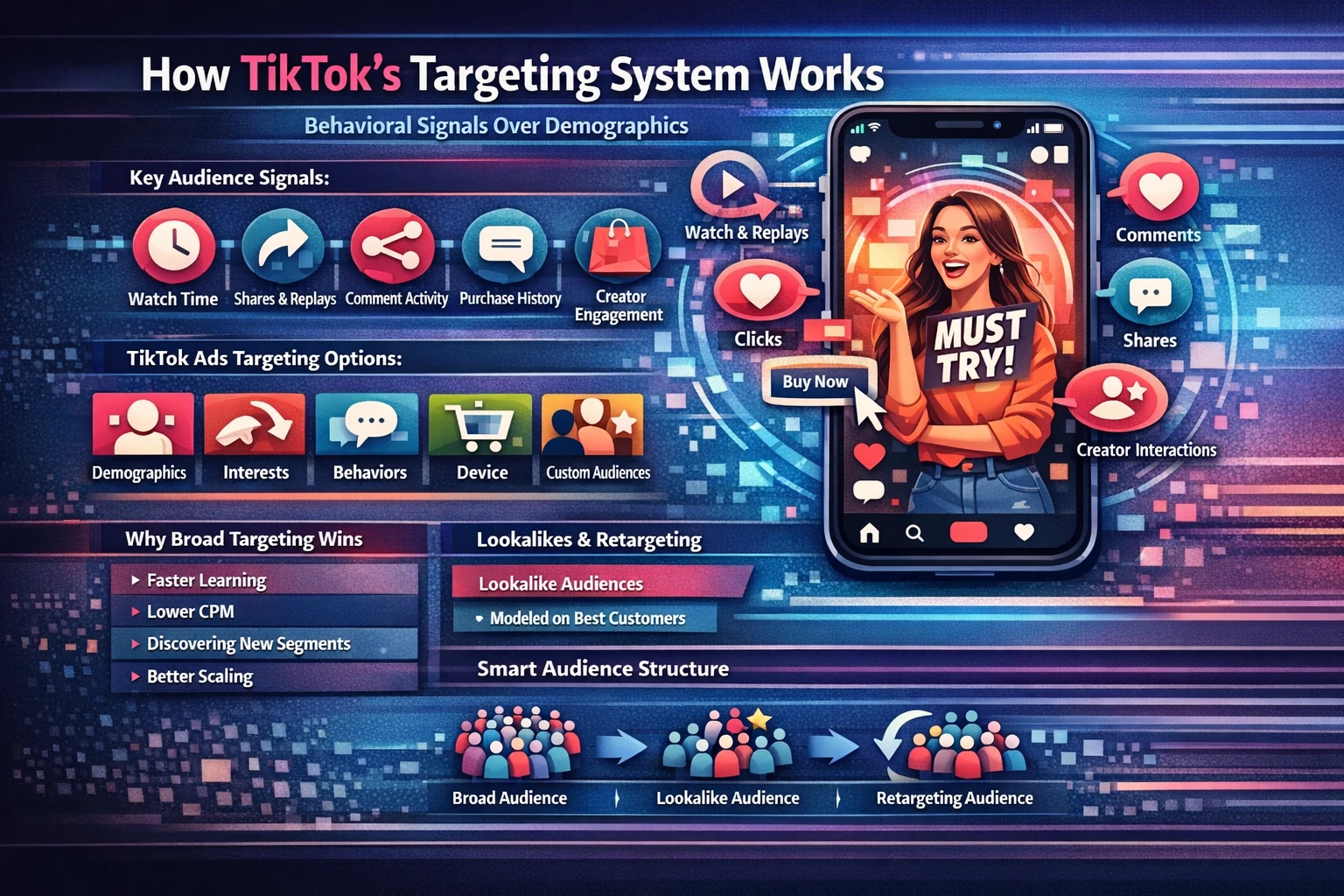
TikTok’s targeting system is built around machine learning that prioritizes behavioral signals over rigid demographic filters. While advertisers can choose interests, behaviors, and custom audiences, TikTok performs best when given broad parameters and enough room to learn. This pillar explains how TikTok identifies the right users, how audience signals shape delivery, and how to structure targeting for efficient scaling.
How TikTok’s Targeting System Works
TikTok’s algorithm evaluates users based on what they watch, engage with, and purchase—not just who they are demographically. The platform builds behavioral profiles using:
- Watch time and video completion
- Replays and shares
- Comment patterns
- Creator interactions
- Shopping activity
- Click and conversion history
- Content categories consumed
These signals allow TikTok to predict which users are most likely to respond to your ad, even if they don’t fit traditional demographic assumptions.
Core Targeting Options in TikTok Ads Manager
TikTok provides several targeting layers, but the platform encourages advertisers to avoid over‑restricting audiences. The main options include:
- Demographics — age, gender, location, language
- Interests — categories like beauty, fitness, gaming, finance
- Behaviors — recent app activity, video interactions, creator engagement
- Device targeting — OS, carrier, device price
- Custom Audiences — website visitors, app users, customer lists
- Lookalike Audiences — modeled from high‑value user segments
While these tools are powerful, TikTok’s algorithm performs best when it has freedom to explore.
Why Broad Targeting Works Better on TikTok
TikTok’s delivery system is designed to find converters through real‑time behavioral learning. Broad targeting allows the algorithm to:
- Test multiple audience pockets
- Identify unexpected high‑intent segments
- Reduce CPM by avoiding narrow competition
- Improve stability during the learning phase
- Scale more efficiently with lower costs
Over‑targeting can trap campaigns in small, expensive audience pools and limit the algorithm’s ability to optimize.
Custom Audiences and Retargeting
Custom audiences help advertisers reconnect with users who already know the brand. TikTok supports:
- Website retargeting via TikTok Pixel
- App retargeting via Events API
- Customer list uploads
- Engagement retargeting (video viewers, profile visitors)
Retargeting works best with short, direct creatives that reinforce trust and drive action.
Lookalike Audiences for Scaling
Lookalikes are one of TikTok’s strongest scaling tools. They can be built from:
- Purchasers
- Add‑to‑carts
- High‑value customers
- Lead submissions
- Engaged video viewers
TikTok offers narrow, balanced, and broad lookalike ranges. Broad lookalikes often perform best because they give the algorithm more room to learn.
Signals TikTok Uses to Optimize Delivery
TikTok evaluates ad performance using several key signals:
- Hook strength (first 1–2 seconds)
- Watch time and completion rate
- Replays
- Click‑through rate
- Conversion rate
- Negative feedback (skips, hides, reports)
These signals influence which users see your ad next. Strong creative accelerates learning and expands reach; weak creative restricts delivery.
Structuring Audiences for Testing and Scale
A simple, scalable structure works best:
- One broad audience
- One or two lookalike audiences
- One retargeting audience
- Minimal interest layering
- No unnecessary demographic restrictions
This structure allows TikTok to optimize efficiently while giving you clear performance insights.